Worcester City Historic Environment Record (HER) is maintained by Worcester City Council and is the database of all known historic buildings and archaeological sites and monuments within the city. It is an information service providing access to comprehensive and dynamic resources including maps, photographs, archaeological reports and even local memories.
HERs contain details on local archaeological sites and finds, historic buildings and historic landscapes and are regularly updated. This information is usually held in a database with a digital mapping system (Geographic Information System).
There are over 80 HERs in England which are maintained and managed by local authorities as the essential core of historic environment services.
We are pleased to share two new films produced by Historic England explaining what an HER is and why they matter. The films feature examples of the work of various HERs including Worcester City and some of our projects here.
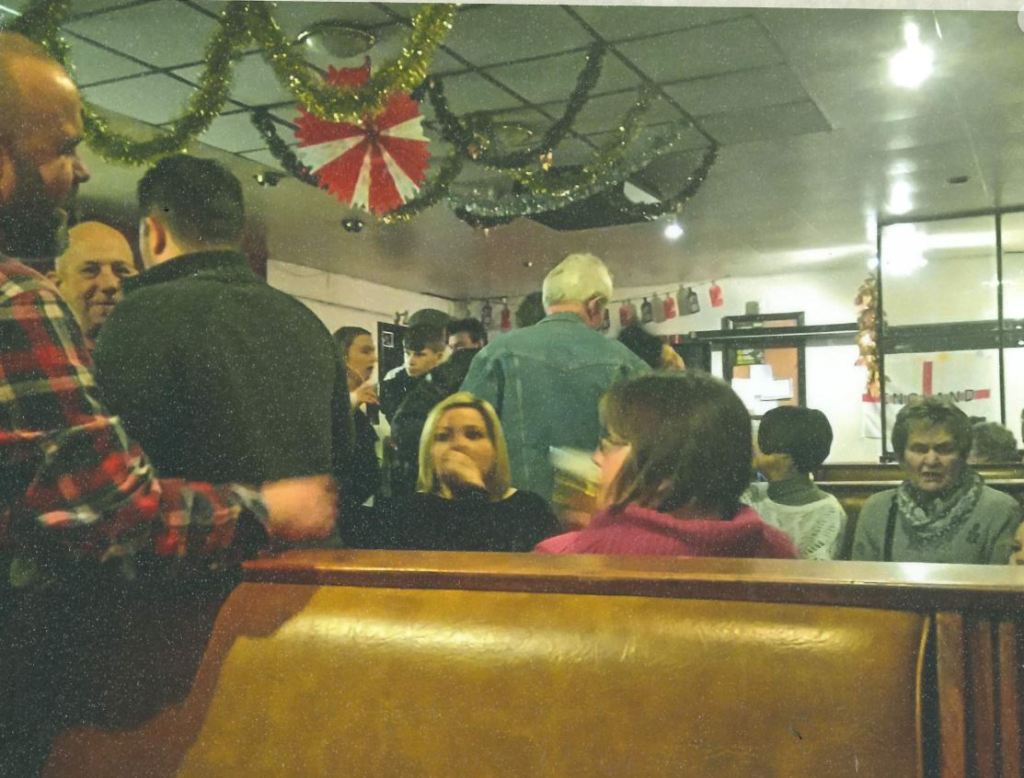
We are pleased to announce that we passed the 400 mark this week! That’s 400 records generated by the public, people with an interest in the local area, who have shared photographs, memories, research and knowledge. Our 400th record is bitter-sweet for many; a collection of photographs of the last night at the Coppertops public house, in January 2017. The pub in Oldbury Road was demolished soon afterwards; these photographs shared by Heather Stone capture a moment in time before the doors closed for good.
Over the last few months all sorts of interesting items have been added, including a number of audio clips from the Factory workers archive at the Museum of Royal Worcester, captured just before closure in 2007. A lovely piece of audio captured by Julia Letts, was shared by Michael Morris, a cup painter, who talks about the pranks that used to be played in the factory – the link here will take you to the record – have a listen!
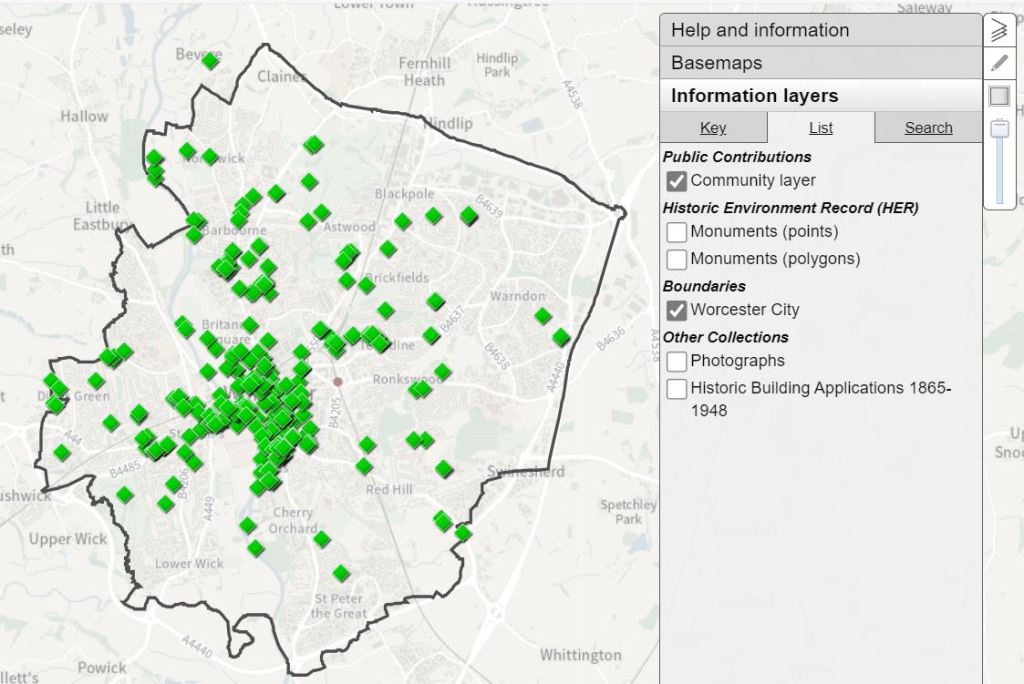
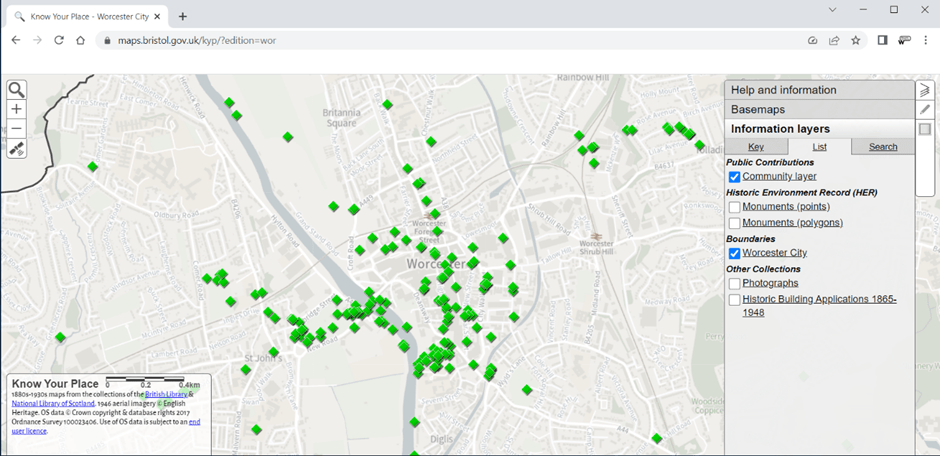
It’s great to see the map of the city filling up with green diamonds – each an individual record where you can go to discover more about the stories of Worcester. There is much more to be added, and many more stories to be shared – get in touch if we can help you add yours – archaeology@worcester.gov.uk
With thanks to Ben O’Neill, who authored the following blog post, as part of his work placement. For more images from this collection, follow the link to the community map on KYP. We’d love to hear from anyone that recognises the people and places shown in the photographs!
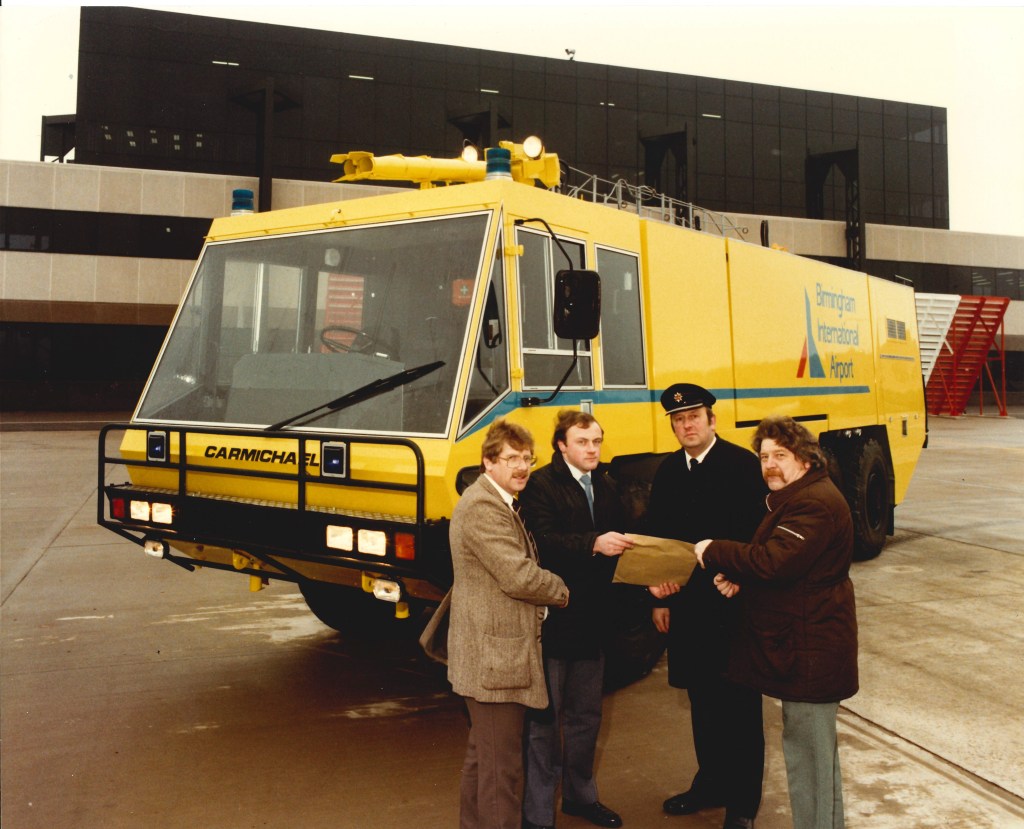
Coming to the Worcester City Council Historic Environment Record on work experience, I am glad to say I have made myself useful by contributing to the fantastic Know Your Place website, made to share and explore local history in Worcester. Going through folders of photos of the company Carmichael & Son, provided to us by the family of Dick Peters (an engineer who worked there), I have documented the faces and places that helped make the history of this fire engine-manufacturing company.
The story of Carmichael started in 1849 as coach builders, it was not until almost a century later in 1947 that the company produced their first fire engine. By the seventies, the company was now known for these big red vehicles and donned the name Carmichael Fire and Bulk Ltd.
A carnival float on Castle Street, Worcester sometime after 1970
Book produced by Carmichael with the address for their Gregory’s Mill Street factory on the back (from the family of Dick Peters)
From here Carmichael helped to distribute fire engines around the globe, all “vehicles built to individual customers’ requirements and comply with all UK and international regulations” as said in their “Worldwide” book.
Fire engines were built for countries and cities far and wide, ranging from Gambia, Lagos to Birmingham and Worcester. This success prompted the renaming of the company to Carmichael International Ltd to incorporate its new market, but by 2004 it went into liquidation and its assets bought by AMDAC Carmichael Ltd (ACL). This story repeated in 2016 as ACL went into liquidation where its assets were bought, and are still owned, by Carmichael Support Services Ltd / SIG.
A picture of a Carmichael engine in Gambia, Africa
There’s a treat in store for local history enthusiasts this Christmas with a new Worcester Life Stories book out on December 20.
Worcester Life Stories – The Big Quiz Edition is packed with more than 250 historic photos of the city, along with plenty of challenging quiz questions.
Most of the photographs in the book form part of Worcester City Council’s Historic Environment Record and have been taken by council officers in the course of their work over the years, illustrating the city’s changing face from the 1950s onwards.
The 60-page hardbound book has been compiled by Worcester City Council’s Historic Environment Record Officer Sheena Payne-Lunn who co-led the Worcester Life Stories project, which began in 2020 as a collaboration between Worcester City Council and Herefordshire and Worcestershire Health and Care Trust, with funding from The National Lottery.
Just before the project was due to launch, the pandemic hit and changes had to be made, with Sheena and her team using photos from the City Council photo archive to compile online quizzes on old Worcester – and these became a huge hit. A selection of the quiz questions and accompanying photographs have been included in the book.
Sheena said: “Our online quizzes were hugely popular and there was so much interest in the photos which we gathered together – people came forward to share their stories and memories of Worcester in years gone by. We hope that this book will help keep memories of our local history alive – and will be an entertaining read for all those interested in Worcester past and present.”
The book costs £19.99 and will be on sale at Worcester Tourist Information Centre at the Guildhall, the Worcester City Art Gallery and Museum in Foregate Street and The Commandery in Sidbury.
There will be various activities for all the family and there will be the opportunity to hear memories from those who worked for the company.
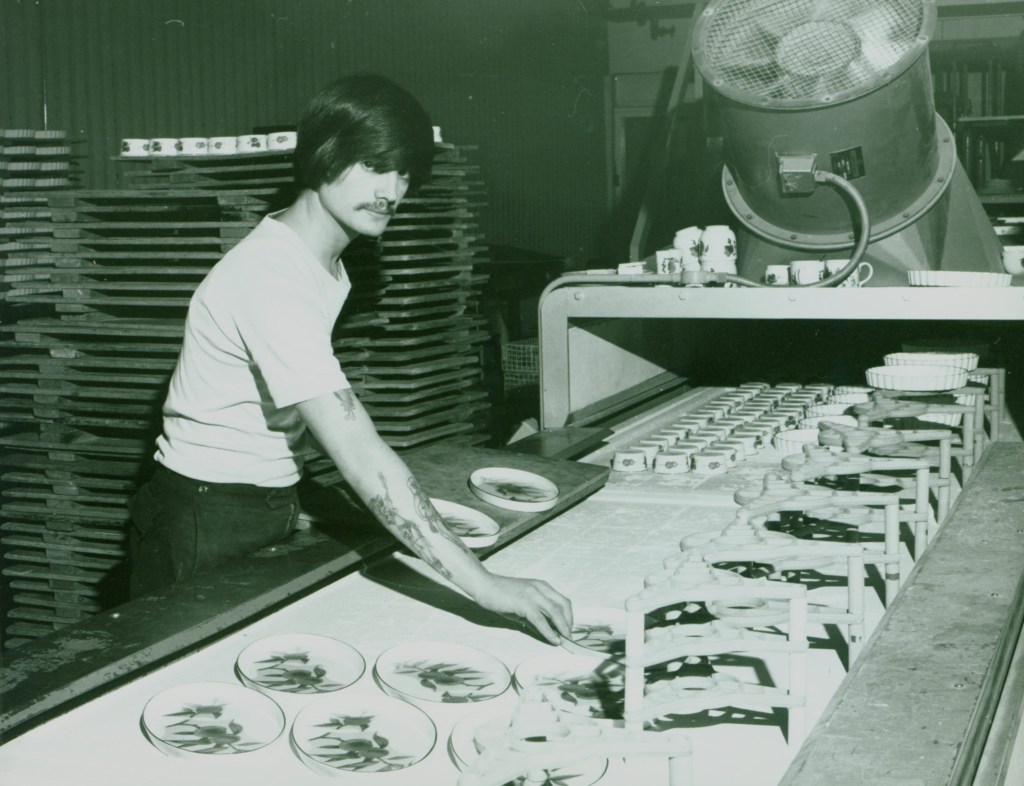
Did you work for Royal Worcester? Come along and share with us your experience! The team will be there on the day to listen and share some photos with you. If you want to get a sneak peak, check out the community layer for pictures of the site and former workers. You never know, you might recognise someone!
Visitors can now enjoy Worcester’s beautiful riverside park more than ever, thanks to colourful new information signs installed at its main entrances.
Sixteen new totem-style signs are being put in place to welcome visitors to the Green Flag-winning park. The new signage includes maps, information on walking and cycling routes, stories from the rich history of the area, and family-friendly facts on the wildlife that lives on, in and near the river.
They also include QR codes that visitors can scan with their mobile phones to find out more and to make the most of their visit to this beautiful location in the heart of Worcester.
The young ones can discover the adventures of Ollie the Otter, a fun character who encourages them to find out more about the riverside’s flora and fauna.
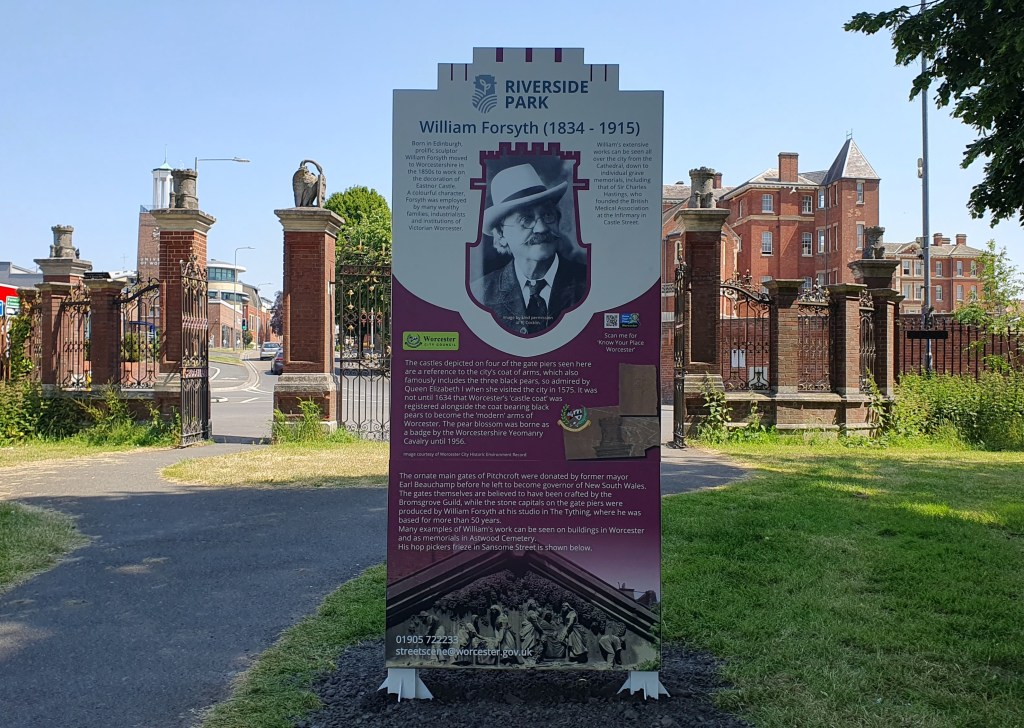
The Worcester City Historic Environment Record team have supported this work by providing heritage content for each of the 16 totems. This has given us the opportunity to highlight aspects of the city’s history that has previously been less known. We are especially pleased to have been able to share the story of a colourful character of Victorian Worcester who’s work was so prolific Worcester residents probably pass it every day without realising.
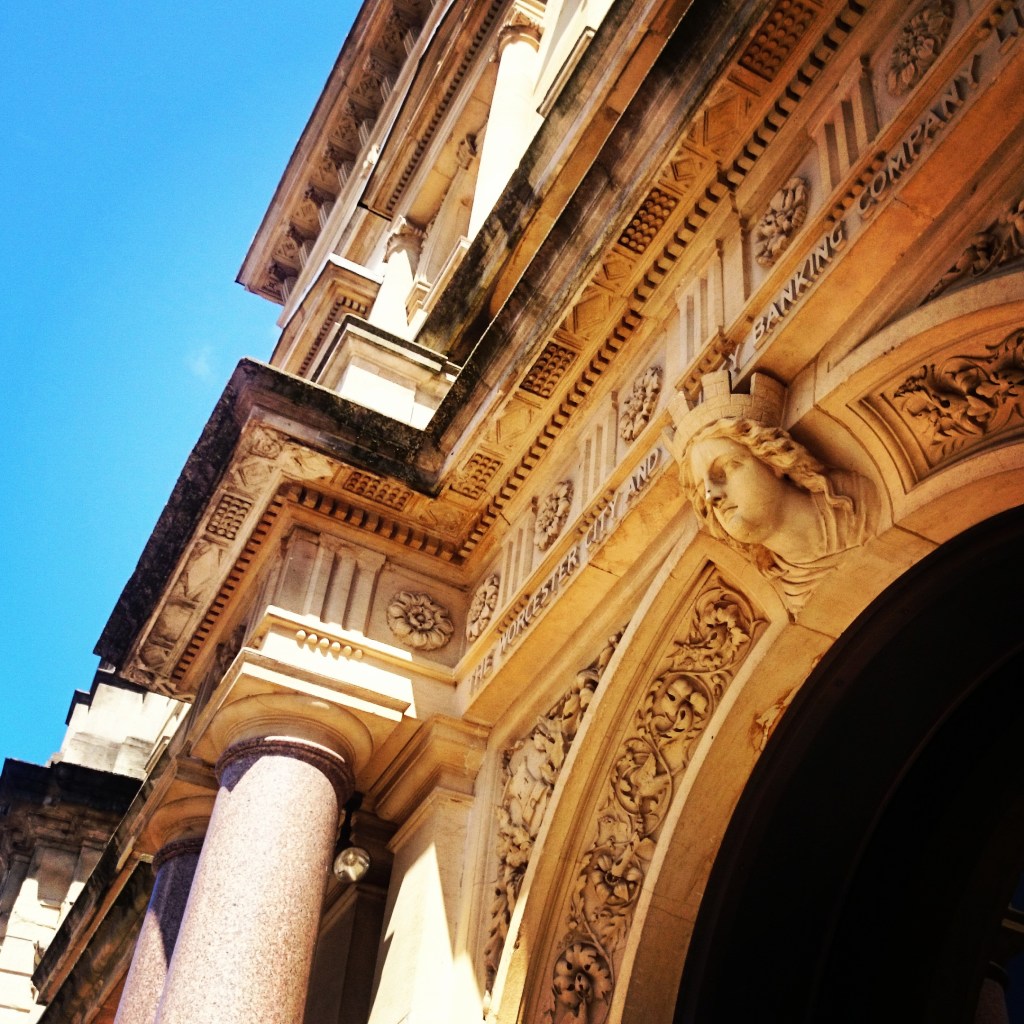
William Forsyth was an ecclesiastical and domestic sculptor based for more than 50 years at his studio in The Tything having moved to the county as a young man to train under Augustus Pugin at Eastnor Castle. William’s work included everything from the restoration of the Cathedral, Lloyd’s Bank on The Cross and The Hop Pickers frieze in Sansome Street, all the way through to tiny architectural details above the doorways of Victorian terraces and gravestones. He is responsible for some of the very grand burial vaults of the great and the good of Victorian society, and is himself commemorated by a very simple memorial in Astwood Cemetery, located in the shadow of the high Catholic cross which he himself created.
Lloyd’s Bank on The Cross, sculpted by Forsyth
Examples of William’s work have been added to Know Your Place by his great grandson Rob Cocklin who has done extensive research on his and his brother James’s work and life. Use the search function on the map to see further examples including Pitchcroft gates where the totem featuring William is situated.
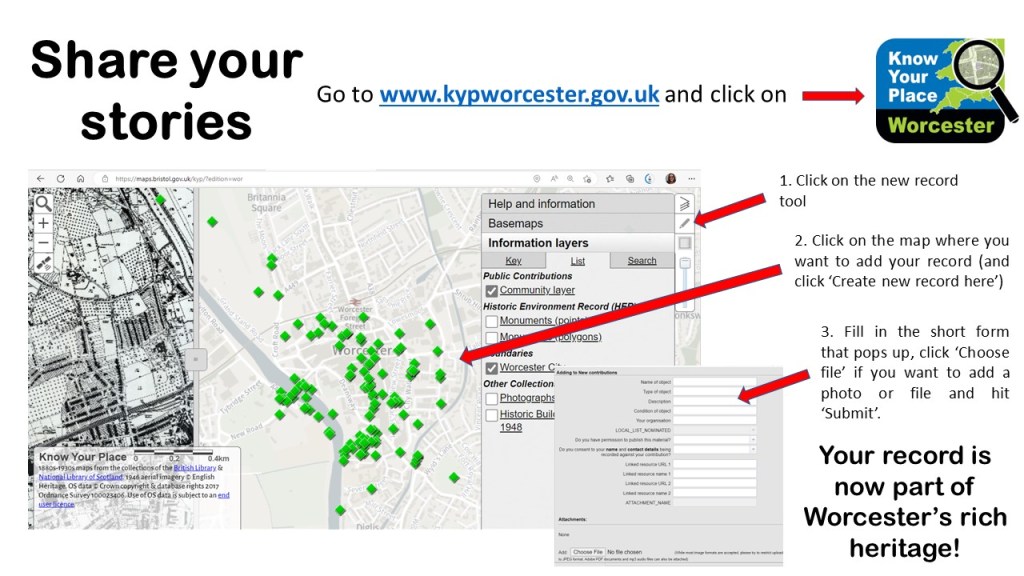
Have you added a record to Know Your Place Worcester yet? If not, it’s really quick and easy to add your photos, files or weblinks to the site and to be part of Worcester’s rich heritage. Whether you have photos in your family album from Worcester in years gone by, have delved into the history of your house, or perhaps have memories of our city that you would like to share, Know Your Place is a growing resource that we hope will benefit from your local knowledge and stories. Not only can you share photographs, but you can upload audio files, written documents or perhaps even a link to a video or webpage elsewhere on the internet. Know Your Place is all about learning and sharing information about Worcester’s historic past for current and future generations.
Here’s how you can quickly and easily share your story and be a part of history!
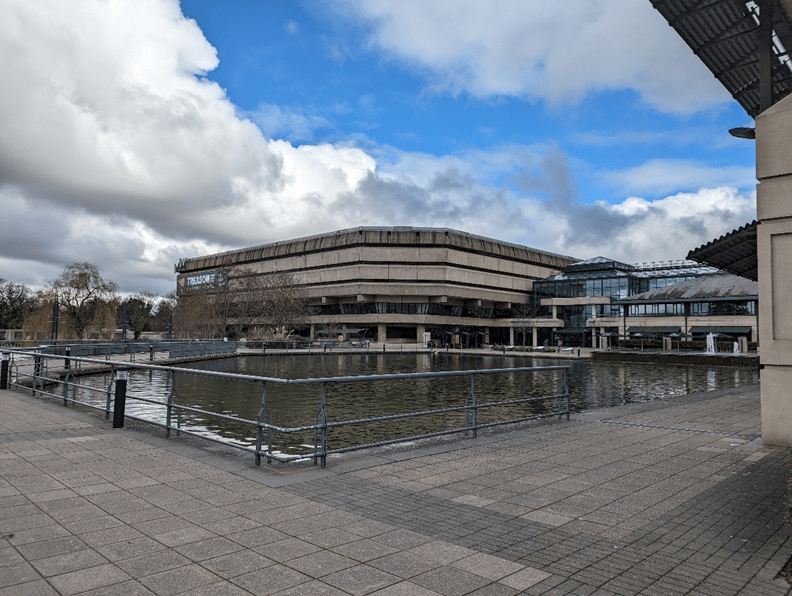
Hopefully everyone had an enjoyable half-term last week! Naomi here, with a little excitement from my week off… I was very lucky to be able to visit the National Archives in Kew, in London, on Thursday. I’ve been researching my grandad’s World War Two records and trying to track down the units he was in.
The National Archives in Kew, London (Author’s own photo)
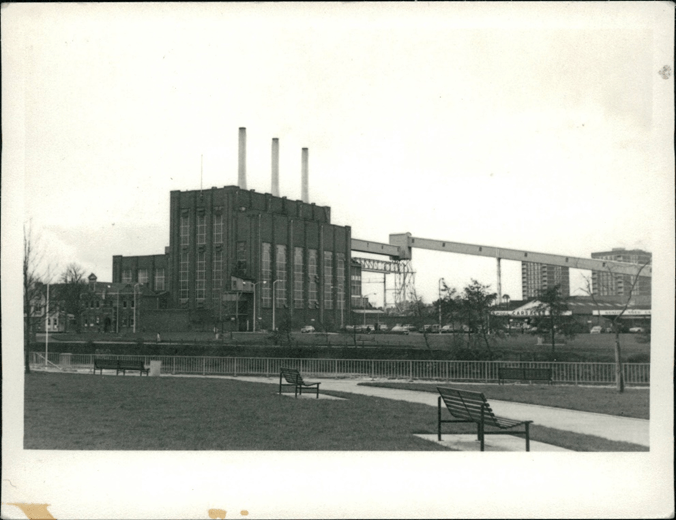
While I was there, though, I popped into the gift shop (who doesn’t love a little knick-knack to take home?) and happened to see their rather interesting story about the mummified rat they have there! It actually put me in mind of an amusing story I heard when I started working with the HER, to do with Worcester’s power station.
Worcester’s Power Station on Hylton Road, early 1970s
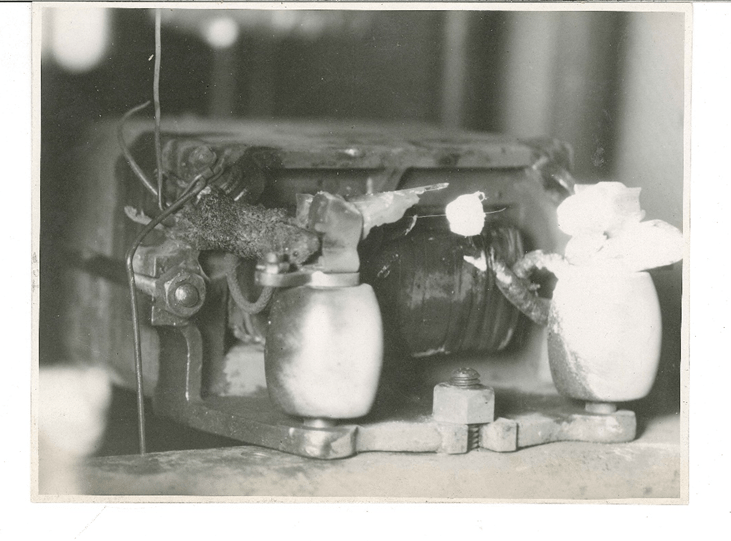
In my first month I stumbled across a photo of some parts in the power station, which I soon realised had a mouse attached to them! Upon showing it to my colleague, Sheena, she told me the story behind the photo. A rather unfortunate mouse had walked into the generator and fried itself, subsequently taking out half of Worcester’s electricity!
The unfortunate mouse!
Previously, I had never known Worcester had its own power station, and it’s only through the work of Worcester Life Stories and Know Your Place that I became aware. (Equally, if you, too, want to know more about the power station, check out Sheena’s blog post on Explore the Past.) The collection of photographs we have is so important for building that picture of Worcester in times past, and we are always on the lookout for unique stories like this one!
The Know Your Place Worcester platform
The Know Your Place Worcester platform is the perfect place for sharing your own photos, or those of your family, which can tell us more about your experiences in Worcester. You can even add audio or video links. We’d love to see and hear them!
I’m at the National Archives!! (Author’s own photo)
Hi everyone! My name is Naomi Taylor and I am the (relatively) new Historic Environment Record and Project Support Assistant (it’s a bit of a mouthful!). I’m an Archaeology and Heritage Studies graduate from the University of Worcester and I started this post at the end of September.
I was born and raised in Worcester, and have never left, so I feel a very strong connection to my home city. This has made getting involved in the HER very exciting and I have been very lucky in my first few months with the events I have been involved in. I jumped straight in with the Virtual Time Travel Trail, the videos of which you can still catch on our YouTube channel, and then on to the Worcester Life Stories book, which has just been released and is available at the Tourist Information Centre and the Museum and Art Gallery shop.
I was already familiar with some of the collection of photographs we have, having been involved with the Worcester Life Stories project earlier on, and I have to say they are one of my favourite aspects of the HER. Everyone loves a photo as they give such a wonderful and unique glimpse into the past. They capture a moment and are one of the few ways to help us imagine ourselves being there, particularly for those of us who have no memories of those times.
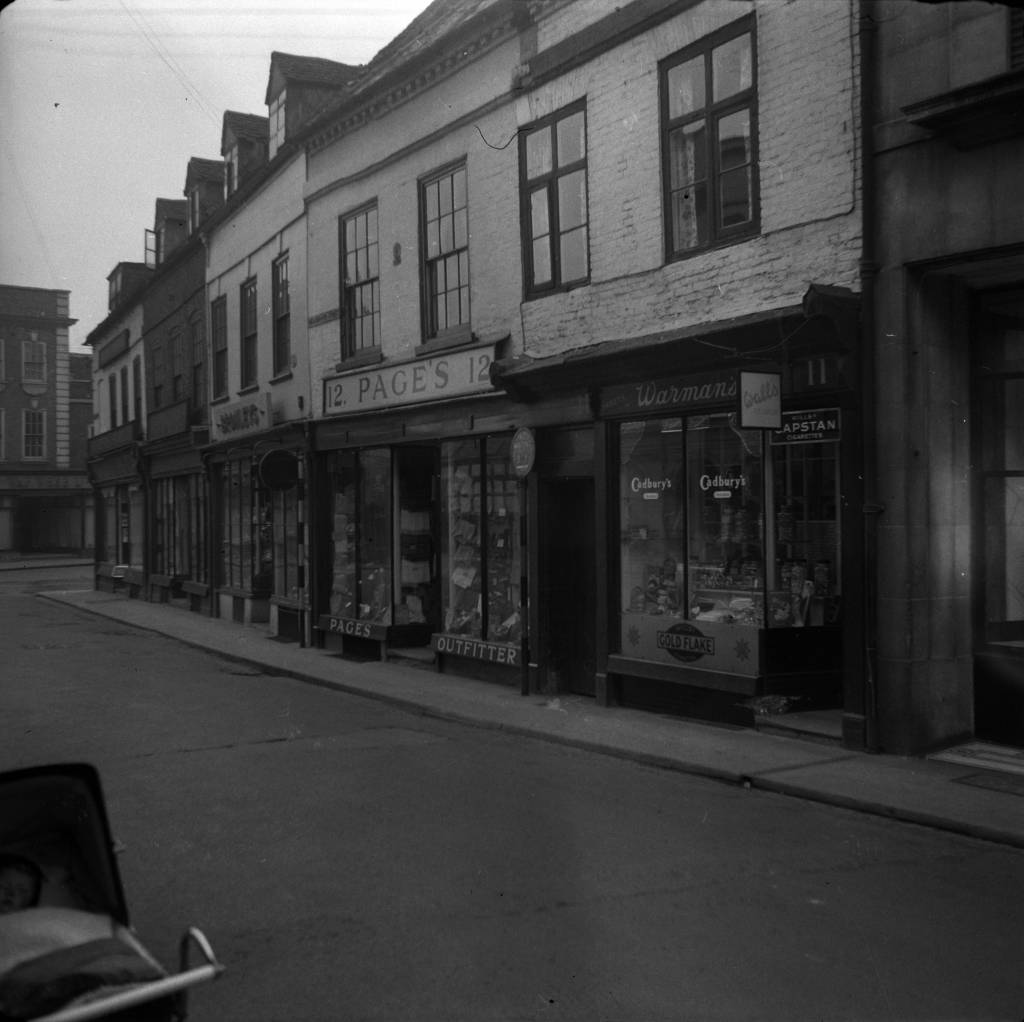
One of my favourite photos in the collection because it shows my family’s favourite shop: Warman’s.
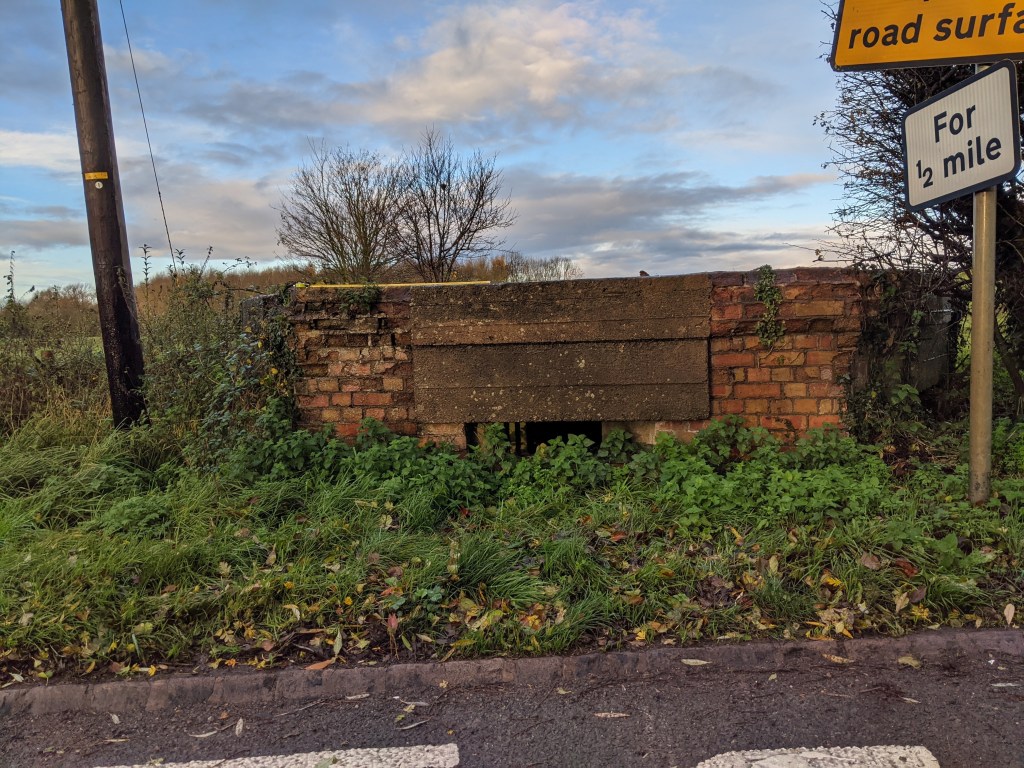
For me, my favourite era to look back on is the 1940s and specifically the Second World War. It has been my chosen research area and I am especially interested in the experiences in Worcester. After all, we are on the edge of losing that generation of experiences and memories. For my dissertation, I chose to focus on the condition of our archaeology from that time period, which I’m sure many of a certain generation will be familiar with: pillboxes, anti-tank defences, gun emplacements… At one time there were countless numbers of them, yet now they are few and far between.
Throckmorton Pillbox: my favourite pillbox!
Of course, one of the ways we can preserve these archaeological features is by recording them and taking photographs. This is also where our platform Know Your Place comes in. It allows you to upload a photo and pin it to a location on the map, therefore allowing people to get a clearer picture of our city in the past. It’s perfect for, as I mentioned earlier, helping us to imagine the former life of a location. For myself, I have only ever known the town centre to be pedestrianised. One of my favourite things to do is imagine what it was like before that, which I can only do accurately through the help of these photos!
My mum, too, has expressed a desire to walk around the city with the newspaper clippings she has collected, and I hope to do this with her, with the help of Know Your Place when we inevitably struggle to place a photo! So, if you have any family photos that show Worcester in times gone by, consider putting them on Know Your Place. It’s a fantastic resource for preserving our history and archaeology. Perhaps it is something my research could benefit from, too. If you see a bunch of photos of pillboxes pop up on the map, you know who they’re from!
You may have heard by now that the Worcester City Historic Environment Record has published its first book! Produced as part of the wider National Lottery-funded project, ‘Worcester Life Stories – in the words of local people’ arrived with only 3 days to spare before Christmas and the first print run is already almost sold out! A second edition is with the printers as we speak and will be available from the Tourist Information Centre, Worcester City Art Gallery & Museum and Tudor House Museum at £19.99.
Compiling the book has been a lovely opportunity to pull together some of the fantastic resources available within the HER, to make more than 180 historic photos available (mostly from the collection but also supplemented by images from private collections) and most poignantly to be able to share local people’s recollections of growing up, living and working around the city. We’ve even been able to link to further information and oral histories online, using QR code links within the book. Here’s one local lady’s review of the book:
“Just the cover of this book was enough to draw me into it – an intriguing photo of a smartly dressed lady and a man sitting on a wall, outside of a building in a lost part of the city…. Who were these people? Why are they there? And where exactly are they?
Going through the book there are many interesting stories accompanying the photos, photos of everyday people doing everyday things – photos of buildings which look familiar, but also different to how they are now; it made me question even more why these buildings were altered and in some cases, completely destroyed, The Blockhouse area being of particular interest to me having had family members live in that area. The Blockhouse is now vastly different to how it was in times gone by, and it was so interesting to see and read about the massive changes in that area.
And it isn’t just photos of buildings and people – a photo which bought back some very personal memories was of the park, and in particular the massive slide at Lansdowne Park where I spent many a happy hour as a child – I had never seen a photograph of the park before, as it was vastly altered in the early 90’s to a more colourful and somewhat safer play park (some may say far more boring too!!)
This book is a treasure. It covers topics not discussed in many other books about Worcester, and the photos in it, along with the stories accompanying them, are fascinating and in some cases very poignant. The story of the lady who had no pictures of her father who had died when she was very young and the subsequent unearthing of a picture of him was incredibly moving.
I would love a second volume of this book if at all possible- it is a work of great importance to the history and social history of Worcester, every Worcester resident with even a tiny amount of interest in the area they live in should read it!!!”
We hope you enjoy the book as much as this lady did!








 Know Your Place Worcester